

It's too late for that: Alison Clark's journey from security guard to QCAT leader
Standing outside court one day, a prosecutor asked Alison Clark a simple question: "If you weren't doing this, what would you be doing?"
Alison didn't hesitate. "I've always wanted to study law."
The prosecutor's response was immediate. "Why don't you go and do it?"
Alison was in her mid-30s, working as an RSPCA inspector. The idea felt impossible.
"I said, you know, it's way too late for that," Alison recalls. "And she told me it’s never too late."
That night, sitting in a hotel room in Bundaberg after a day of work, Alison started researching law degrees. Within weeks, she was enrolled.
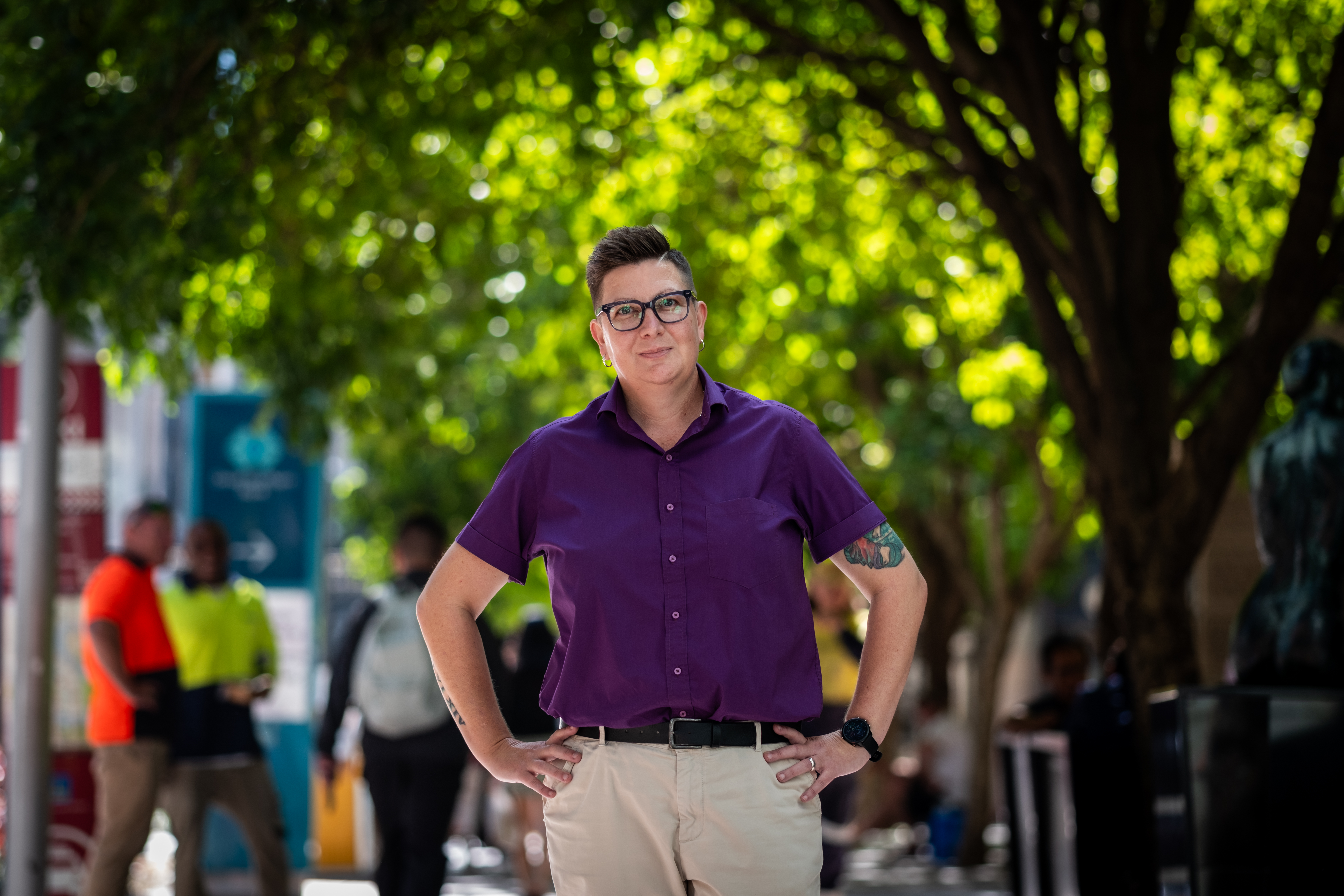
Today, she's Acting Deputy Principal Registrar for the Human Rights Division at the Queensland Civil and Administrative Tribunal (QCAT), leading a team of 89 staff who support vulnerable adults with impaired decision-making capacity and their support network through the QCAT application process related to their care and decision-making.
A pattern of standing up
Alison's drive to help vulnerable people didn't start with law. It's been there her entire life.
She remembers marching down to the principal's office in high school after hearing comments in class that she found offensive toward a friend who'd immigrated to Australia.
"There's a lot of people that find it hard to find a voice - and I just think it's really important that we do the right thing and treat people how we want to be treated." That instinct led her through security work, investigations, and eventually to the RSPCA as an inspector and team leader - prosecuting 17 cases in three years while focusing on education and support over punishment wherever possible.
When she joined Queensland Government, it was a deliberate move toward work that would support her law degree - but it had to stay meaningful.
The work that matters
For Alison, meaningful work meant finding her way into roles where she could make a tangible difference.
After three years in Liquor and Gaming, she moved to the Office of the Public Guardian as a principal investigations officer. Within months, she was acting in team leader and manager roles - building strategic skills and understanding how systems could better serve people.
She then moved to Victim Assist Queensland as an executive manager before coming to QCAT in April last year, stepping into her current role in July.
Now, she oversees the Human Rights Division - which handles two critical jurisdictions: guardianship and administration matters (involving adults with impaired decision-making capacity who need a substituted decision maker), and reviews of certain child protection decisions.
"The team does all the case management to get applications ready for the tribunal hearing,"
Alison explains. "It's always been important to me to do something meaningful. We spend so much time at work - if you look back over my career history, I tend to stay in the roles that have a meaning behind them, where you're doing some sort of good out in the community."
Bringing your whole self to work
Twelve months ago, she was diagnosed with ADHD - a diagnosis that didn't limit her, but gave her language for things she'd always struggled to explain.
"For so many years, I was still trying to fit in," she says. "I was never completely comfortable."
She works best under pressure. She reads people differently — picking up on small changes in tone, body language, or behaviour that others might miss. She makes quick decisions when time is tight but can ruminate when she has too much space to think.
"Being diagnosed as an adult and knowing the challenges I've had, makes me more in tune with what's going on for people," she says. "I always say to the leaders that I lead: when you go into a conversation around performance, always start from that place of empathy and curiosity."
She's also candid about her leadership style - acknowledging openly with her team that she can be task-focused and direct, and encouraging them to tell her if that doesn't land well.
"Positive culture equals positive performance," she says. "If people are happy at work and bringing their whole selves to work, then you'll end up with a high-performing team."
Advice for others
For people who are neurodiverse and considering leadership, her message is clear: focus on the positives. "When we focus on the negatives, that's when we start thinking it's career-limiting. But it's not," she says. "Just be upfront about it. Don't hold back. Be your best self and go get it."
Outside of work, she rides her bike over the Green Bridge each day - a time for reflection and letting go. She reads voraciously. She keeps a routine. And she holds onto a quote that guides how she leads: People won't always remember your words - but they'll remember how you made them feel. "I want to be the leader that people aspire to be," she says.
More information
Learn more about QCAT services.